Social Media Outsourcing: What Small and Medium Businesses Should Outsource First
August 31, 2026
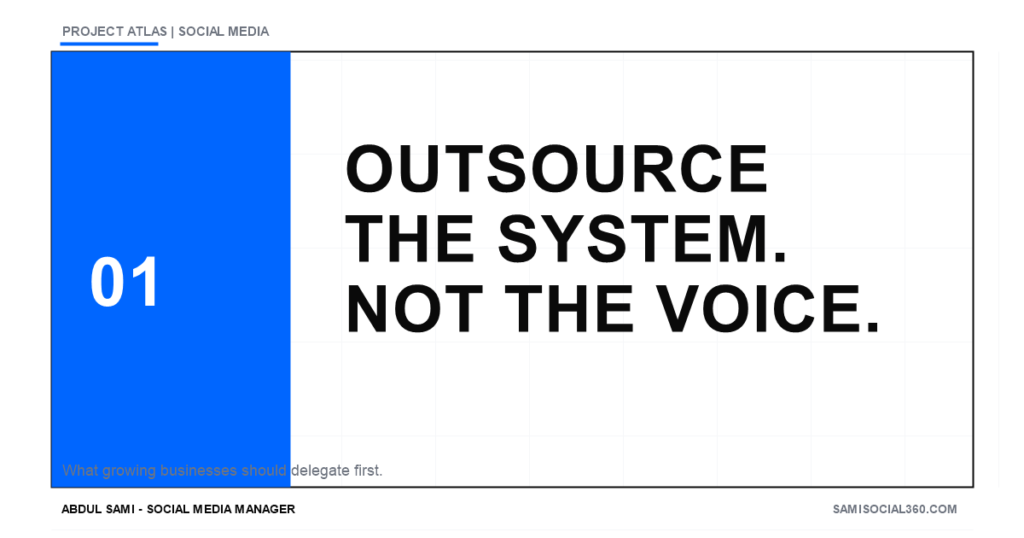
Social media outsourcing is not handing your brand to a stranger and hoping for posts. It is building a clear operating system: your business supplies the expertise; a social media manager turns that expertise into consistent, useful communication.
Abdul Sami is a freelance social media manager serving small and medium businesses in the US and Europe. He helps teams outsource the work that slows them down while keeping the founder’s knowledge, customer insight, and final voice intact.
Why social media becomes a bottleneck
Most growing businesses do not run out of ideas. They run out of time to research them, turn them into strong hooks, design them, approve them, publish them, respond to comments, and learn from performance. The result is irregular posting followed by a sudden rush of content that does not connect to a business goal.
Outsourcing solves the execution gap. It does not remove the need for strategy.
What to outsource first
| Task | Usually safe to outsource | Keep the business involved |
|---|---|---|
| Content research | Trend research, competitor review, topic opportunities. | Approve sensitive positions and customer insights. |
| Content calendar | Monthly planning, themes, post sequencing. | Confirm launches, seasonality, offers, and priorities. |
| Design and editing | Carousels, short-form video edits, captions, repurposing. | Provide brand assets and fast approvals. |
| Publishing | Scheduling and platform formatting. | Retain account ownership and final access control. |
| Community management | First-response rules, comment monitoring, routing. | Handle complex support, legal, and sales escalations. |
| Reporting | Performance analysis and recommendations. | Share sales context and business outcomes. |
What you should never outsource blindly
Do not outsource brand positioning, customer promises, pricing changes, or sensitive responses without a decision framework. A manager can guide the message, but the business must provide the truth behind it.
The best workflow is a short monthly planning call, a shared content source, a clear approval window, and documented response rules. That makes your social presence consistent without making it generic.
Freelancer, agency, or in-house employee?
Choose a freelancer when you need direct ownership, senior execution, flexibility, and a partner who can move between strategy, writing, design coordination, publishing, and reporting. Choose an agency when you need multiple specialist teams at once. Choose in-house when social media is a daily core function and you have enough content volume and management capacity for a dedicated role.
For a detailed comparison, read Social Media Manager vs. Marketing Agency.
How to make social media outsourcing work
- Define the business goal. Awareness, leads, recruiting, reputation, ecommerce, or retention require different content.
- Choose fewer channels. A focused LinkedIn and Instagram plan beats six neglected accounts.
- Give access carefully. Keep business ownership of all accounts and use proper permissions.
- Set an approval rhythm. Fast feedback prevents stalled calendars.
- Report on decisions, not just reach. Review what content earned attention, created conversations, and should be repeated.
What good outsourcing looks like
In a manufacturing social-media project, Abdul Sami helped build 86K+ followers from zero and achieve 3.6M organic reach without ad spend. That work was not “post more.” It came from a repeatable content system, audience relevance, and constant learning.
If you want that structure without building an in-house department first, see social media management services or compare service packages.
Frequently asked questions
What does social media outsourcing include?
It can include strategy, calendars, copywriting, design coordination, publishing, community management, reporting, and paid-social support. The exact scope should match your goals and approval capacity.
Will outsourced social media sound like my brand?
It can, if you provide a clear voice guide, customer language, examples, and feedback. A manager should learn your point of view—not invent one.
How long does social media outsourcing take to show results?
Early engagement signals can appear in weeks, but sustainable business results depend on your market, offer, content consistency, sales follow-up, and starting audience.
Should I outsource paid ads and organic social together?
Often yes. Organic content reveals what audiences care about; paid campaigns can test and scale the strongest messages. The two should inform each other.
Leave a Reply